About the blog mark
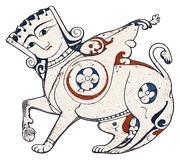
The Human-Headed Winged Quadruped
The story of an imagined creature that emerged from a Seljuk bowl and became the mark of this blog.
Another language edition is publishedفارسی
The image before you depicts an imagined creature—a human-headed winged quadruped—at the bottom of an earthenware bowl from the Seljuk period. It is a type of Garrus ware dating from the eleventh or twelfth century, part of the art and history of Greater Iran.
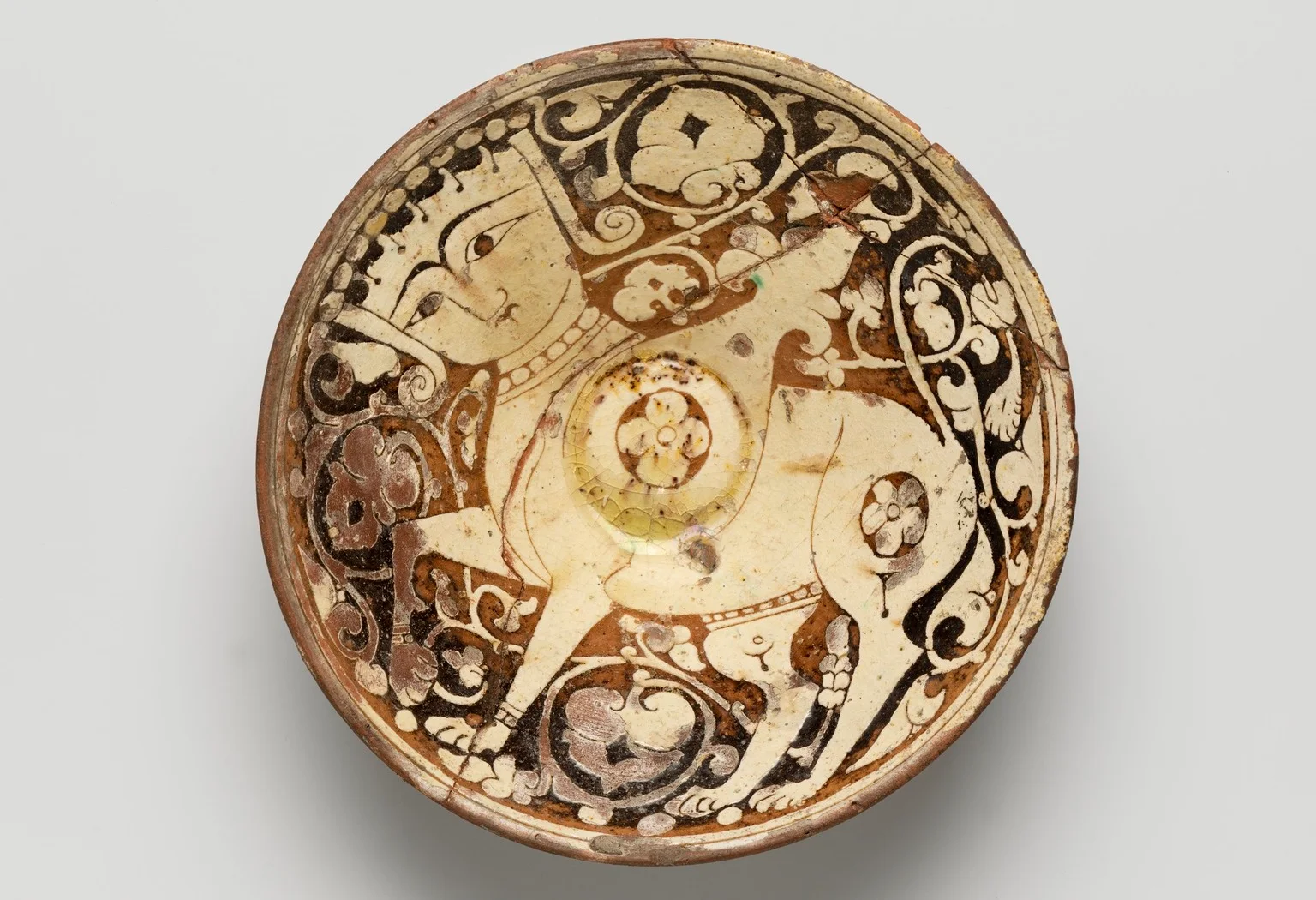
The design was made by cutting through the white surface of the ceramic beneath a transparent brown glaze. The bowl is 6.4 centimetres high and 18.1 centimetres in diameter. But what held my attention was neither its size, nor the technique used to make it, nor even the name this creature might have had when it was created. What I saw was imagination itself: roughly a thousand years ago, someone imagined a creature that did not exist in nature and drew it at the bottom of a bowl. That person is gone and unknown to us, but the trace of their imagination remains.
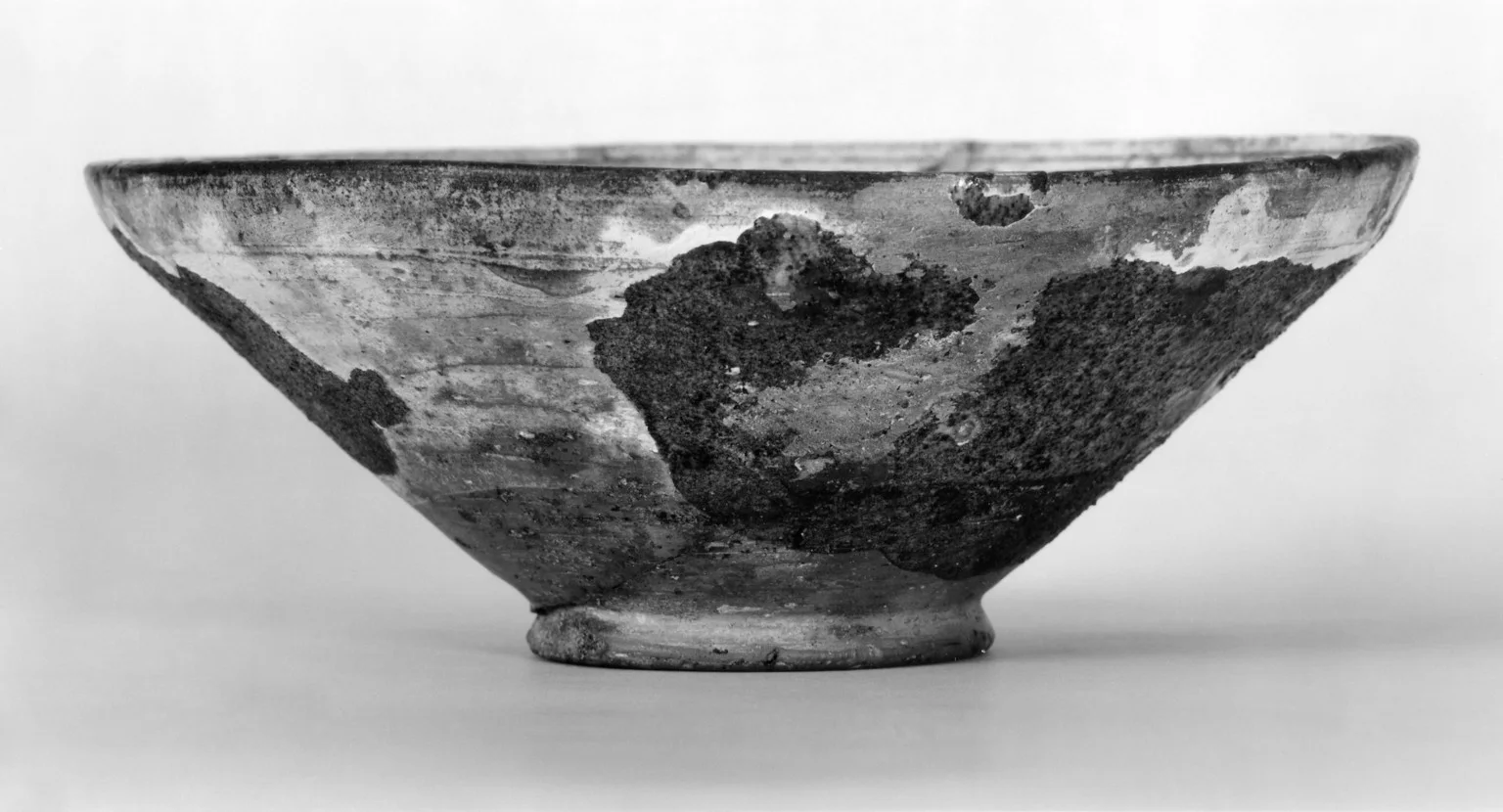
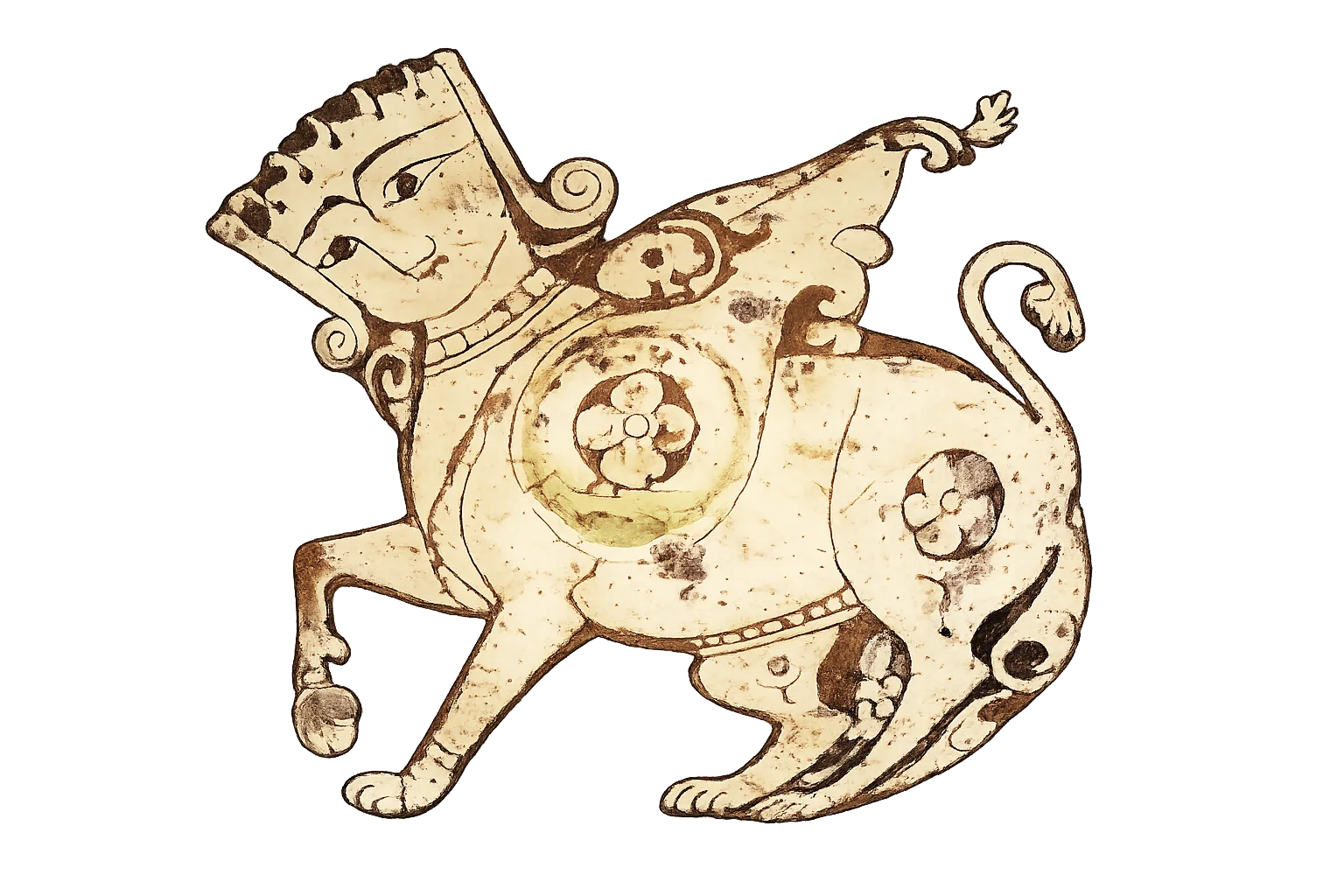
I do not know exactly what the maker of the bowl called this creature, or what they meant by drawing it. Nor is this essay an attempt to give it a definitive identity. For me, it is enough that this is a historical image of an imagined creature—an image made by someone who lived before me, in which I have now found my own meaning.
Imagination
Let us begin by asking why someone might have imagined such a creature.
If a person in the past had wanted to imagine a being of ultimate power, perhaps they would have pictured something like this: the strength of a bull, lion or horse, combined with the singular intelligence of a human and the ability to fly. It brings together the most powerful things people knew in the world around them and something that still lay beyond their reach: flight.
I am not claiming that the maker of this bowl drew the figure with precisely this idea in mind. This is my reading of the image. I see in it a human refusal to settle for what nature has provided. Someone took parts of the real world, removed them from their familiar places and recombined them into a form that had never existed before. A quadruped no longer merely walks on the ground: it has a human head, it thinks, and its wings carry it beyond the limits of the earth.
This imagined form predates the Seljuk period. Similar human-headed winged quadrupeds appear in much earlier periods of Iranian history, from a bronze object attributed to Luristan and dated to around the eighth century BCE to the human-headed winged lions from the Palace of Darius at Susa. These are not one creature with one fixed meaning, but signs of a recurring idea.
Nor was this idea confined to the peoples of Greater Iran. The same impulse to combine human and animal forms appears in the imagination of other civilisations, in figures such as the Egyptian sphinx. This does not mean that the creature on this bowl is itself a sphinx. It means that, in different places and at different times, people have turned to imagination to cross the boundaries of nature, creating beings assembled from several real creatures.
This thought—or, better, this old human imagining and the desire to make an image that reaches beyond the limits of nature—fascinated me. There is something in this creature that connects the historical experience of being human, from the past through the present, to me. We, too, imagine. We, too, refuse to settle for what the tangible natural world around us provides.
Why This Creature?
To me, this creature is more than an old and beautiful image. Its Iranian history and roots matter. Someone within the history and geography to which I also feel I belong imagined it and placed that imagined form on an everyday object. Roughly a thousand years later, the image has emerged from the bottom of a bowl and become part of this blog’s identity.
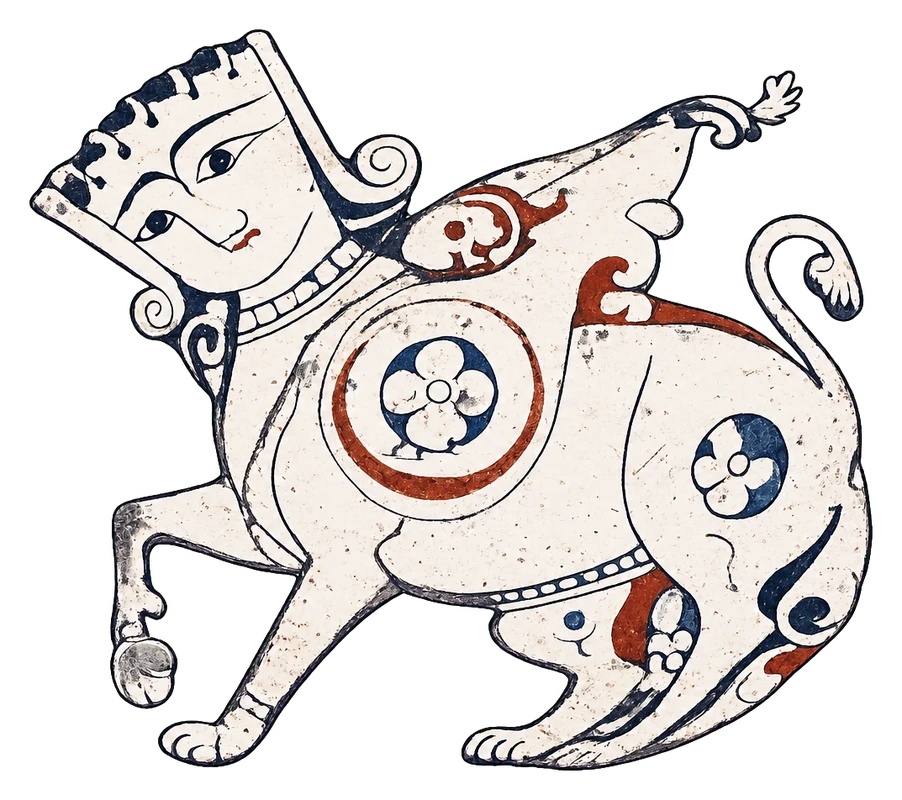
This blog, too, is meant to move between things that do not always seem to belong together: past and present, history and technology, imagination and engineering, personal experience and technical knowledge. That is why a composite creature is an apt image for it—a creature that belongs to no single world, language or even species.
The version you see on this blog is not a cleaned-up copy of a historical work. It continues the same act of imagination. The creature’s original form has been preserved, but it has been remade to live in a new environment: the same creature, in another version and for another purpose.
Software Engineering
In my view, software engineering differs from most other engineering disciplines in one important respect: the freedom we have to rethink and change what we have built. Once an architect has put up a building, they remain bound by its geometric, material and aesthetic constraints. Buildings change, too; they are renovated and sometimes find new uses. But every alteration must contend with the weight of materials, place and construction costs.
In software engineering, the final form is not so definite. Software is not finished when it is produced and released; instead, it enters a life cycle. During that cycle it grows, becomes more complete, is repeatedly reconsidered and sometimes gives rise to something that was never anticipated at the outset.
So you may first create a quadruped, later give it human intelligence and, in another version, add wings. Not because you knew all of this from the beginning, but because what you made remained alive, acquired new needs and left you able to continue building it.
This blog is such a creature for me. It is not built once and then complete. Each new essay, translation, reconsideration and experience adds something to it. Perhaps one day it will lose a limb; perhaps another day it will grow a new wing.
I chose this creature as the mark of the blog because of the imagination I see in it: the imagination of someone for whom the existing world was not enough, and who dared to envision something that did not yet exist.